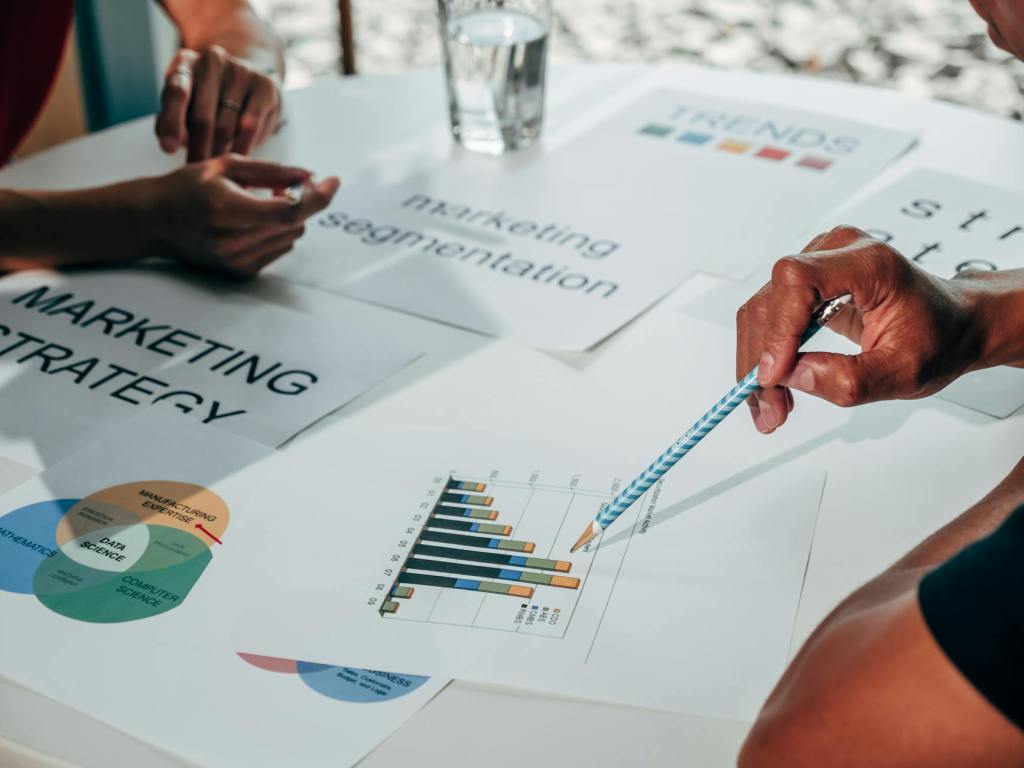
The marketing landscape has moved past the “AI hype” phase. As we look toward 2026 and 2027, we are entering an era of Artificial Intelligence Integration, Radical Transparency, and Generative Optimization.
The strategies that worked in 2023 or 2024—keyword stuffing, mass-produced AI blog posts, and broad-spectrum social targeting—are no longer just ineffective; they are actively detrimental to brand health. By 2026, the barrier to entry for content creation has dropped to zero, meaning the “noise” in the digital marketplace is at an all-time high. To stand out, brands must pivot from being “content engines” to “experience and trust engines,” focusing on how to increase website traffic through quality rather than quantity.
This roadmap outlines the ten essential trends that will define marketing in 2026 and 2027 and provides a strategic guide on how to navigate them.
1. From SEO to GEO (Generative Engine Optimization)
By 2026, the traditional Google Search Results Page (SERP) has been fundamentally transformed. Users no longer click on a blue link to find an answer; they receive a synthesized response from a Generative AI agent (like Google Gemini, OpenAI’s SearchGPT, or Perplexity). Traditional SEO trends to watch are shifting toward these AI-driven models.
The Strategy:
Marketing teams must shift their focus from “ranking #1” to “becoming the cited source.” GEO involves optimizing your content so that AI models recognize you as the most authoritative data point. This requires:
- Structured Data: Using advanced Schema markup to help AI “read” your site.
- Direct Answers: Crafting “nuggets” of high-value wisdom that are easily extractable by LLMs.
- Brand Citations: Building a digital footprint across authoritative third-party sites so the AI sees a consensus regarding your expertise.
2. The Rise of “Agentic AI” in the Marketing Stack
We are moving from “Generative AI” (which writes things) to “Agentic AI” (which does things). In 2026 and 2027, your marketing department will likely be managed by autonomous AI agents that don’t just draft an email but also autonomously conduct A/B testing and re-allocate budgets. This evolution is a key part of the future of digital marketing.
The Strategy:
The role of the Marketing Manager will shift to “Agent Orchestrator.” Success will depend on your ability to set the right constraints and goals for these agents. Brands that adopt autonomous agents for customer service and personalized lead nurturing will see a 40% reduction in operational overhead while increasing conversion rates through 24/7 hyper-responsiveness.
3. The “Human-Made” Premium and E-E-A-T
As the internet becomes flooded with synthetic, AI-generated content, a “flight to quality” is occurring. Consumers in 2027 are developing an “AI-blindness.” They can sense when a brand is being lazy. To combat this, brands must prioritize building high-quality backlinks from real, human-vetted sources.
The Strategy:
Double down on E-E-A-T (Experience, Expertise, Authoritativeness, and Trustworthiness).
- Human-Centric Content: Highlight real employees and real customer stories.
- Digital Watermarking: Brands will start using “Human-Made” certifications to prove that a specific thought leadership piece was developed by a human expert.
4. Hyper-Personalization via Predictive Analytics
In 2026, personalization isn’t just “Hello [First_Name].” It is Predictive Anticipation. By leveraging first-party data, brands can now predict when a customer is likely to enter a “buying window.” This is essential for driving targeted web traffic that actually converts.
The Strategy:
Move away from segmented lists and toward “Segments of One.” Use predictive modeling to alter your website’s UI in real-time based on the visitor’s past behavior. If a user has a history of price sensitivity, your 2027 landing page should automatically highlight value and discounts.
5. The Death of the Cookie and the Zero-Party Data Goldmine
Privacy regulations have reached a tipping point by 2026. Tracking users across the web is no longer a viable strategy. Marketers must learn how to improve website conversion rates without relying on invasive tracking methods.
The Strategy:
The most successful brands of 2027 will be those that have built a “Zero-Party Data” pipeline.
- Interactive Quizzes: Capture preferences through engaging surveys.
- Value Exchange: Clearly communicate that data collection is used solely to enhance the user experience.
6. B2B Influencer Marketing and the “Executive Creator”
The “Creator Economy” has finally invaded the B2B space. In 2026, people don’t want to follow a “Software Company”; they want to follow the CEO or a Lead Engineer. This shift is revolutionizing social media marketing strategies.
The Strategy:
Transform your subject matter experts into internal influencers. Companies should provide support for their executives to build personal brands. In 2027, a post from a trusted industry expert will carry 10x the weight of a paid corporate advertisement.
7. Spatial Computing and Immersive Brand Storytelling
With the mainstream adoption of headsets like the Apple Vision Pro, “Spatial Computing” is changing how we interact with products. This new medium requires a fresh look at digital marketing for small businesses looking to compete with tech giants.
The Strategy:
E-commerce is shifting from 2D grids to 3D “Digital Twins.”
- Virtual Showrooms: Consumers should be able to “walk” through a digital version of your store.
- Interactive Instruction: Providing AR overlays for product setups will become a standard part of the marketing journey.
8. Social Commerce: The Seamless Purchase Funnel
By 2026, the “click-out” is dead. TikTok Shop and YouTube Shopping have matured into frictionless ecosystems. To succeed here, brands need to understand the importance of high-quality web traffic coming directly from social platforms.
The Strategy:
Optimize your social presence for “In-App Commerce.” This means your social media team is no longer just responsible for “engagement” but for “revenue.” High-quality, shoppable video content is the primary driver of D2C sales in 2027.
9. Radical Transparency and the “Circular Marketing” Model
The 2026 consumer is highly attuned to “greenwashing.” Authenticity is no longer a marketing buzzword; it’s a survival requirement. This transparency is a key element in building brand loyalty.
The Strategy:
Adopt “Circular Marketing.” Market the entire lifecycle of your product—how it’s made, how it’s repaired, and how it’s recycled. Brands that provide a “Product Passport” showing the supply chain journey will win the trust of Gen Z and Gen Alpha.
10. Community-Led Growth (CLG) and Decentralized Hubs
As “Big Tech” algorithms become more cluttered, users are retreating into “Digital Campfires”—smaller, private communities like Discord or niche professional networks. Understanding niche marketing is critical for these closed ecosystems.
The Strategy:
Shift from “Audience Building” to “Community Cultivation.” Instead of trying to reach 1 million strangers, focus on deeply engaging 1,000 advocates in a private hub. By 2027, the most valuable asset a brand can own is a proprietary community platform where customers talk to each other.
The 2026-2027 Implementation Roadmap
To stay ahead, your organization needs a phased approach.
Phase 1: The Audit (Q3 – Q4 2025)
- AI Readiness Audit: Evaluate which parts of your content pipeline can be automated.
- Traffic Quality Check: Ensure you are driving relevant visitors who align with your long-term goals.
Phase 2: The Pilot (Q1 – Q2 2026)
- Launch an “Executive Creator” Program: Identify 2-3 internal experts and begin building their presence.
- Test Agentic AI: Deploy an AI agent for a specific task, such as lead qualification.
Phase 3: The Scale (Q3 2026 – 2027)
- Integrate Social Commerce: Fully synchronize your inventory with social platforms.
- Shift to Community-Led Growth: Launch your private community hub to move advocates off general social feeds.
Conclusion: The New Marketing Mindset
The themes for 2026 and 2027 are clear: Efficiency through AI, and Authenticity through Humans.
The “Ultimate Strategy” isn’t about choosing between technology and humanity; it’s about using technology to handle the data, so that humans can focus on the storytelling. By focusing on strategies for long-term growth, you can ensure your brand remains relevant in an ever-changing digital world.
The roadmap is set. Is your brand ready to stop chasing the algorithm and start leading the conversation?


Leave a comment